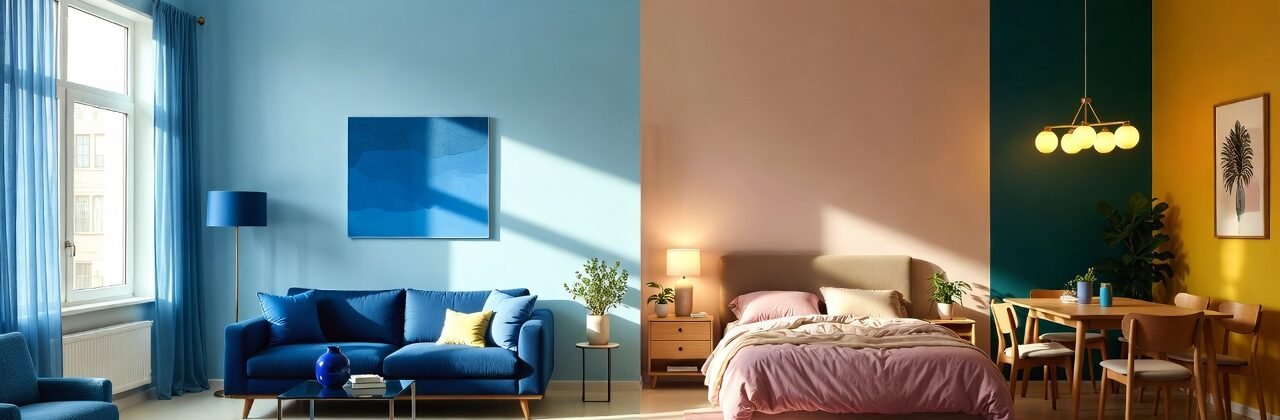
The Psychology of Colors in Interior Design

The Psychology of Colors in Interior Design

Colors are not just visual choices—they directly influence emotions, energy levels, and how we experience a space. The right color palette can make a room feel calm, vibrant, spacious, or cozy, while the wrong one can feel overwhelming or uninspiring.

In modern interior design, understanding color psychology is essential for creating homes that feel both beautiful and emotionally balanced.

At Studio24 by Shreya, we believe that every shade communicates a feeling. Our approach to color selection goes beyond trends—we design spaces that reflect your lifestyle, personality, and emotional well-being.

Modern living room featuring a teal blue accent wall, natural wood furniture, yellow accent chair, and coral-orange throw pillows demonstrating how to balance cool and warm colors in interior design

Neutrals: The Foundation of Calm & Timeless Design

Neutrals form the backbone of sophisticated interiors.

Why Neutrals Work

  • Colors like white, cream, beige, and soft grey create a serene and balanced atmosphere.
  • They allow furniture, textures, and décor elements to stand out effortlessly.
  • Neutral palettes visually expand spaces, making rooms feel open and uncluttered.

Best Use Cases

  • Small apartments
  • Minimalist interiors
  • Living rooms and bedrooms needing long-term flexibility

Design Tip: Layer neutrals with textures like wood, linen, and stone to avoid flat or cold interiors.

Five earthy neutral paint color swatches ranging from warm cream and beige to terracotta and sage green, showing the neutral color palette options for timeless interior design

Warm Colors: Energizing Social & Creative Spaces

Psychological Impact

  • Red: Passion, confidence, and drama
  • Orange: Creativity and enthusiasm
  • Yellow: Positivity and optimism

Where to Use Warm Tones

  • Living rooms
  • Dining areas
  • Creative or collaborative spaces

Best Practice: Use warm colors as accent walls, artwork, or soft furnishings to maintain balance and avoid visual fatigue.

Contemporary living room with a vibrant red accent wall, natural wood furniture, and white linens showcasing how to use warm bold colors strategically to add energy and sophistication

Cool Colors: Creating Calm, Focus & Spaciousness

Cool tones are ideal for spaces that require relaxation and mental clarity.

Benefits of Cool Colors

  • Blue promotes calmness and trust
  • Green creates balance and a connection to nature
  • Soft purple adds quiet luxury and creativity

Ideal Rooms

  • Bedrooms
  • Home offices
  • Meditation or wellness spaces

These shades reduce visual noise and help interiors feel more breathable and organized.

Spacious living room with warm burnt orange walls, cream-colored sofas, natural wood side tables, colorful patterned cushions, and green potted plants creating a warm inviting atmosphere

Earthy & Natural Tones: Warmth Inspired by Nature

Earth-inspired colors bring grounding energy and timeless appeal.

Popular Earthy Shades

  • Terracotta
  • Olive and sage green
  • Sand, taupe, and warm browns

Why They Work

  • Create cozy, welcoming environments
  • Blend modern aesthetics with natural comfort
  • Age well and remain stylish over time

Perfect for family rooms, lounges, and homes seeking warmth without heaviness.

Close-up of paint color samples in green, red, blue, and brown with a paintbrush being used to test colors, showing the professional process of selecting the right colors

Bold Accent Colors: Adding Personality Without Overwhelm

Bold colors are best used strategically.

How to Use Bold Accents

  • Cushions, rugs, and throws
  • Wall art or feature décor
  • Statement furniture pieces

Why Accents Matter

  • Add character and individuality
  • Easy to update with changing trends
  • Instantly uplift the room’s mood

Perfect for family rooms, lounges, and homes seeking warmth without heaviness.

Contemporary living room featuring a teal-green accent chair, orange sofa, and vibrant multicolored rug with bold geometric patterns, demonstrating how to use multiple bold colors cohesively.

Color Psychology at a Glance

  • Red: Represents passion, energy, and drama—perfect for bold statements.
  • Yellow: Brings optimism and cheerfulness, ideal for brightening darker spaces.
  • Blue: Creates calm, trust, and clarity—great for bedrooms or study zones.
  • Green: Symbolizes balance, growth, and harmony, connecting to nature.
  • Purple: Adds a sense of luxury and creativity when used thoughtfully.
  • White: Reflects simplicity and purity, enhancing space and light.
  • Grey: Suggests sophistication and neutrality, balancing out bolder hues.
Overhead view of professional interior design color selection tools including a full color wheel, multiple paint color swatches, paintbrushes, and color sample cards for matching colors

Key Things to Consider Before Choosing Interior Colors

  • Test paint samples in daylight and artificial lighting
  • Balance warm and cool tones for emotional harmony
  • Choose colors you’ll enjoy long-term, not just trends
  • Align colors with your daily lifestyle and comfort needs

Conclusion: Designing with Color, Emotion & Purpose

Color is one of the most powerful tools in interior design—it shapes how you feel, live, and connect with your home. Thoughtful color selection can enhance comfort, improve focus, and elevate everyday living.

Studio24 by Shreya, specialize in crafting interiors that blend aesthetics, psychology, and functionality. Serving homeowners in Lucknow and beyond, our expert designers help you choose color palettes that reflect who you are and how you live.

Ready to transform your home with the right colors? Let Studio24 by Shreya design a space that feels calm, inspiring, and uniquely yours

  • Book a Color Consultation Today!
  • Get personalized interior design guidance tailored to your lifestyle.

Leave A Comment

Transforming Spaces, Crafting Dreams

Contact Info
Office Address

5th Floor, Summit Building,
Vibhuti Khand, Gomti Nagar, Lucknow,
Uttar Pradesh – 226010

WhatsApp